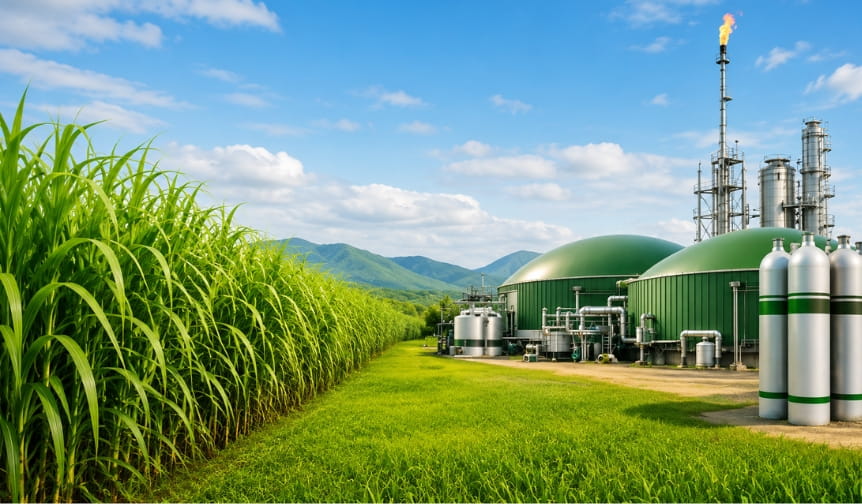

Blendtech is a leading technology provider in the domain of compressed biogas with a background of having built and operated more than 50 biogas plants in the past with expertise in various feedstocks.
#23, Rajarajeshwari complex, CJ Venkatesh das road, Padmanabhnagar, Bengaluru 560070
Napier to CBG is a very promising business venture. The unique nature of raw material presents an opportunity to the investors to generate energy from locally available sources.
Napier grass (Pennisetum Purpureum) is a variety of grass that was developed over the past decades. This grass grows in high density and is adaptable to any agro climatic conditions across India. The ability of Napier to grow in a wide variety of conditions throughout the year makes it the most sought after feedstock.
Yield
Depending on the Agro climatic conditions Napier yields anywhere between 130-200 tons per acre per year.
Cutting interval
The first growth takes about 4-6 months whereas the subsequent harvest takes about 75- days.
DM content
Napier is best harvested at around 25% Dry Matter content to achieve the best possible biogas yield.
Field Harvesting
Fine Chopping
Fermentable slurry
An important activity that helps chop the large stems of Napier into 25mm size pieces. The grass is typically harvested through either a self propelled Harvester or tractor mounted harvester (power drive through a PTO shaft).
The Napier is shredded into pieces measuring less than 5 MM in size. This size reduction helps to increase surface area for the Methanogen Archaea during the anaerobic digestion process. Addition of adequate water ensures pumpability of the shredded gas.
Enzymatic treatment is necessary to convert the Complex sugars into simple digestible sugars. This also ensures homogeneity in the solution and avoids flotation of crushed Napier on the surface of water.
Napier is digested with a HRT (Hydraulic Retention time) of roughly 30-35 days which generates about 135 cubic metres of raw biogas under ideal conditions.
Silaging is not mandatory for feeding to the CBG plant. Silages serve as a safety stock to ensure that we do not run out of feeding even during the rainy season.